
French terracotta floor tiles
French terracotta floor tiles
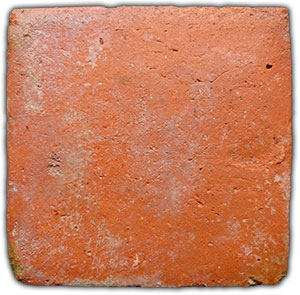 Square tomettes
Square tomettes were historically the first to appear. Many terracotta tiles date back to the Middle Ages, sometimes glazed or decorated with patterns, and usually small (around ten centimetres per side), probably because they were easier to dry and fire.
With the Industrial Revolution and the growing popularity of this material, square tomettes became larger: often around 15 cm per side, sometimes up to 20 cm.
Very common in the south of France, hexagonal tomettes spread widely in the 18th century from tile works often located near good-quality clay deposits. They even became known as "Provençal tomettes". The hexagonal shape makes production easier, thanks to shorter sides and less acute angles, which are therefore less fragile during firing. Laying is also easier and quicker, even with irregular tiles.
Less common, eight-sided tomettes require a specific laying pattern with cabochons, small diamond-shaped inserts. The visual effect is very attractive, especially with black cabochons, but laying them is trickier.
Sizes vary from one region and one tile works to another. On top of this comes the irregularity of a material that is often handmade and can change shape during firing. In other words, the tomette is not a high-precision material compared with modern tiles. In fact, it is precisely this irregular look that gives it its charm.
Many tiles measure close to 15 cm, and sometimes up to 20 cm.
Larger rectangular terracotta tiles are usually called parefeuilles.
A tomette is usually about 2 cm thick.